
Sooner or later, every LLM visibility program outgrows its dashboard. You want the citation data in your own warehouse, a share-of-voice number feeding a client report, or a Slack alert when a competitor gets cited somewhere you don’t. None of that works unless the tool actually exposes an API, not just a claim of one in a sales deck.
We went through the nine LLM visibility platforms we track on this site and checked which ones publish real API access. Two didn’t have anything we could confirm, so they sit out of this specific list. The other seven do have an API, but “has an API” covers a wide range of things, from a self-serve key you can generate this afternoon to a feature that only exists inside an undocumented enterprise contract.
The seven, at a glance
| Rank | Tool | API access | Overall grade | Entry price (USD) |
|---|---|---|---|---|
| 1 | Otterly.AI | [ A- ] | [ B+ ] | $29/mo |
| 2 | Profound | [ C+ ] | [ B+ ] | $99/mo (Starter, ChatGPT only) |
| 3 | Ahrefs Brand Radar | [ B ] | [ B ] | $199/mo add-on |
| 4 | SE Visible | [ B- ] | [ B- ] | $99/mo |
| 5 | Scrunch | [ C ] | [ B- ] | $250/mo |
| 6 | Knowatoa | [ C ] | [ C+ ] | $59/mo |
| 7 | Evertune | [ D ] | [ C ] | $3,000/mo |
1. Otterly.AI
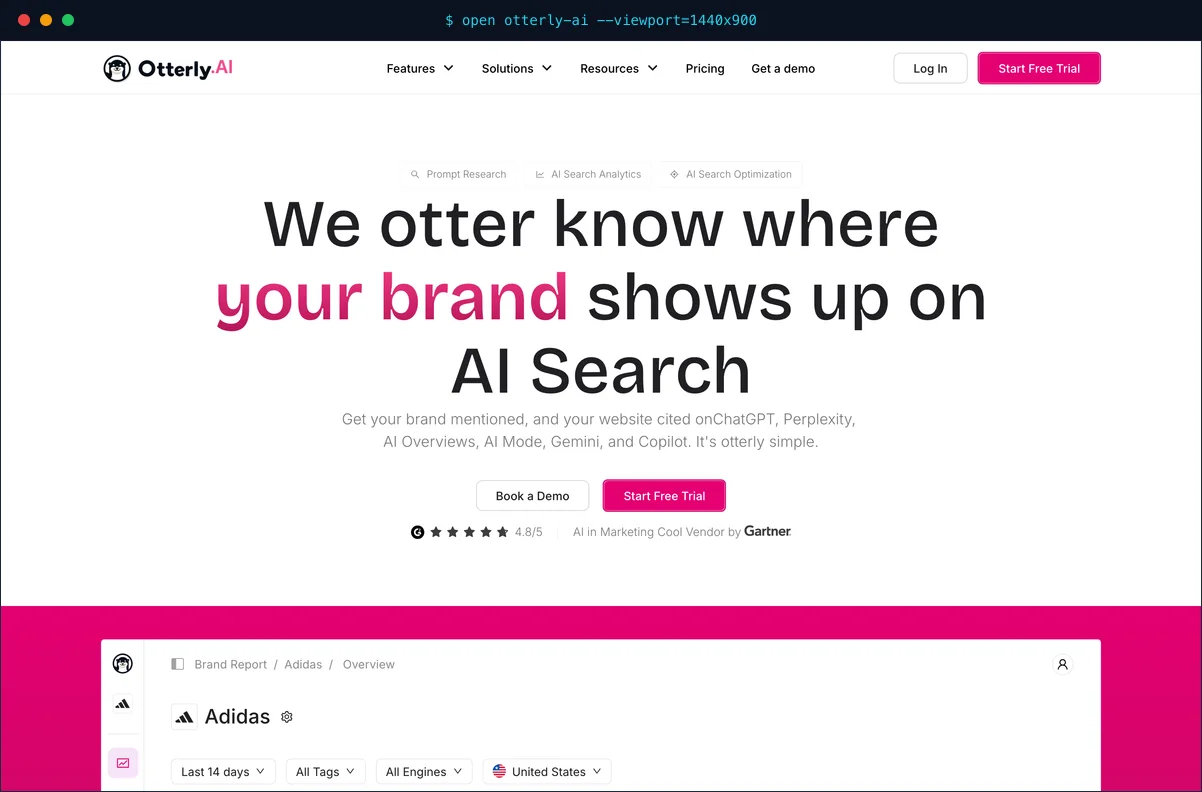 Otterly.AI’s report view, the same data structure its public API returns on request.
API access: [ A- ] · Overall: [ B+ ]. Otterly.AI shipped a public API in June 2026, alongside a Claude Skill integration and a marketplace of 101+ workflow templates. There’s no enterprise sales call required to get a key, which puts it well ahead of every other tool on this list for a developer who just wants to start pulling data today.
The trade is depth on the other side of that API. Otterly.AI tracks six engines and does not natively cover Claude or Meta AI, so whatever you build on top of it inherits that gap. The Lite plan’s 15-prompt cap is also thin for anything beyond a proof of concept; a real integration project needs Standard at $189 per month or higher.
Best for: developers and small teams who want to start building against a live API today without an enterprise contract.
2. Profound
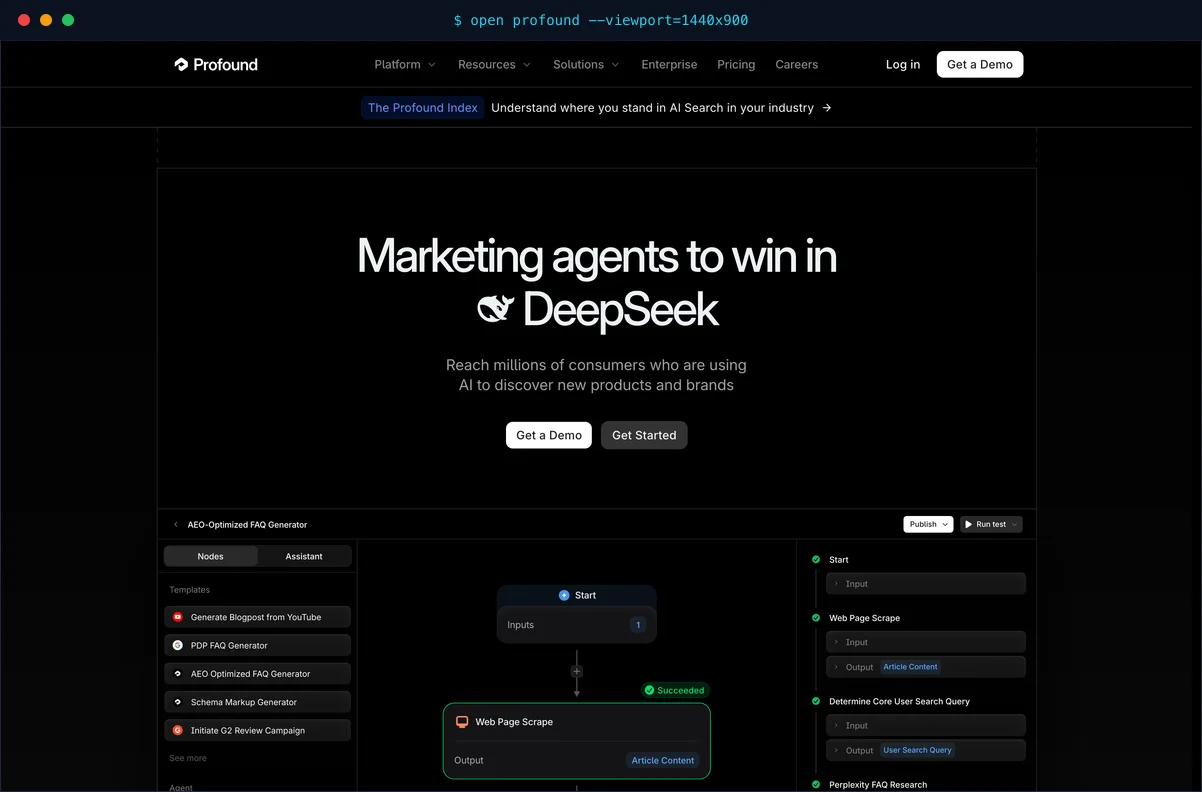 Profound’s citation map view, the data layer its Enterprise API is built to expose.
API access: [ C+ ] · Overall: [ B+ ]. Profound lists API access as part of its Enterprise tier, alongside SSO, SAML, and SOC 2 Type II, sitting next to a dedicated strategist rather than a public price. That’s a reasonable trade for a large team buying a managed relationship, but it means there’s no published documentation to review before you commit, and no self-serve path at all.
What you’d be exporting is genuinely strong. Profound tracks the widest engine field of any tool in this comparison, maps individual citation URLs behind an answer, and adds Prompt Volumes, a demand-side dataset showing what real users actually type into these assistants. If your team can justify the Enterprise conversation, the underlying data is the deepest we found anywhere in the nine tools we track.
Best for: enterprise teams that already plan to sign a custom contract and want the richest citation dataset behind that API once they do.
3. Ahrefs Brand Radar
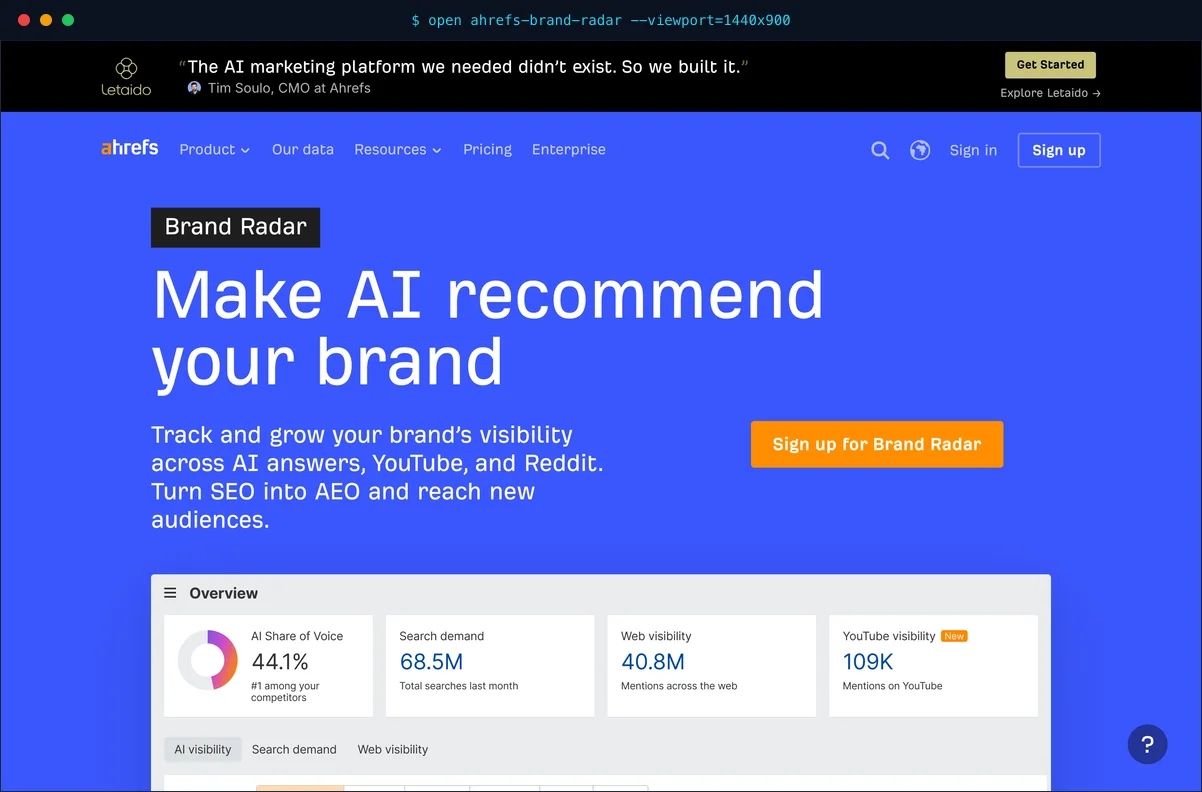 Ahrefs Brand Radar’s benchmarking view, built on its 405 million-plus search-backed prompt database.
API access: [ B ] · Overall: [ B ]. Ahrefs Brand Radar documents both API and MCP access, plus a Looker Studio connector for teams that want AI visibility data sitting next to existing SEO dashboards without custom pipeline work. That’s a genuinely mature integration story, and it’s built on the largest prompt database in this comparison.
Two things limit it for a live pipeline. It’s an add-on requiring an existing paid Ahrefs plan from $129 per month, plus $199 to $699 per month for the AI visibility index, so all-in cost before you write any code can clear $800 per month. Chatbot data behind that API also refreshes monthly rather than daily, so anything built for near-real-time alerting will feel stale.
Best for: teams already paying for Ahrefs who want AI visibility data flowing into an existing BI stack without a second monitoring subscription.
4. SE Visible
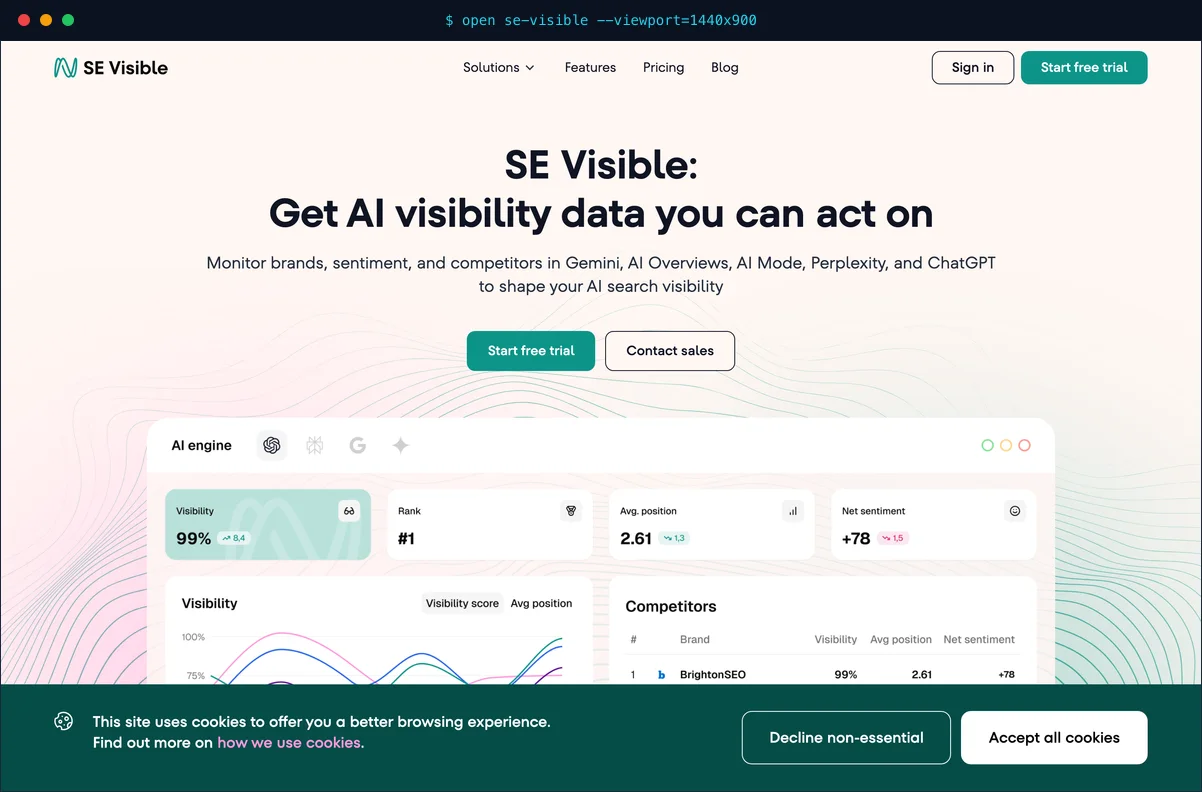 SE Visible’s cached-answer view, storing the full assistant response text an API pull can return.
API access: [ B- ] · Overall: [ B- ]. SE Visible documents both MCP access and a standard API for pulling live SEO and AI visibility data into external tools, which is a real, usable integration point for a team already inside the SE Ranking ecosystem. It also caches the full text of AI answers, so an export includes the actual response, not just a citation count.
The friction is figuring out which product you’re integrating with. SE Ranking’s Core and Growth plans, a separate AI Search Add-on, and standalone SE Visible plans all overlap with different limits, so confirming what your API access actually includes takes more label-reading than it should. Coverage also stops at five engines, with no Copilot.
Best for: SE Ranking customers who want AI visibility data joined to their existing SEO API pulls without adding a separate vendor relationship.
5. Scrunch
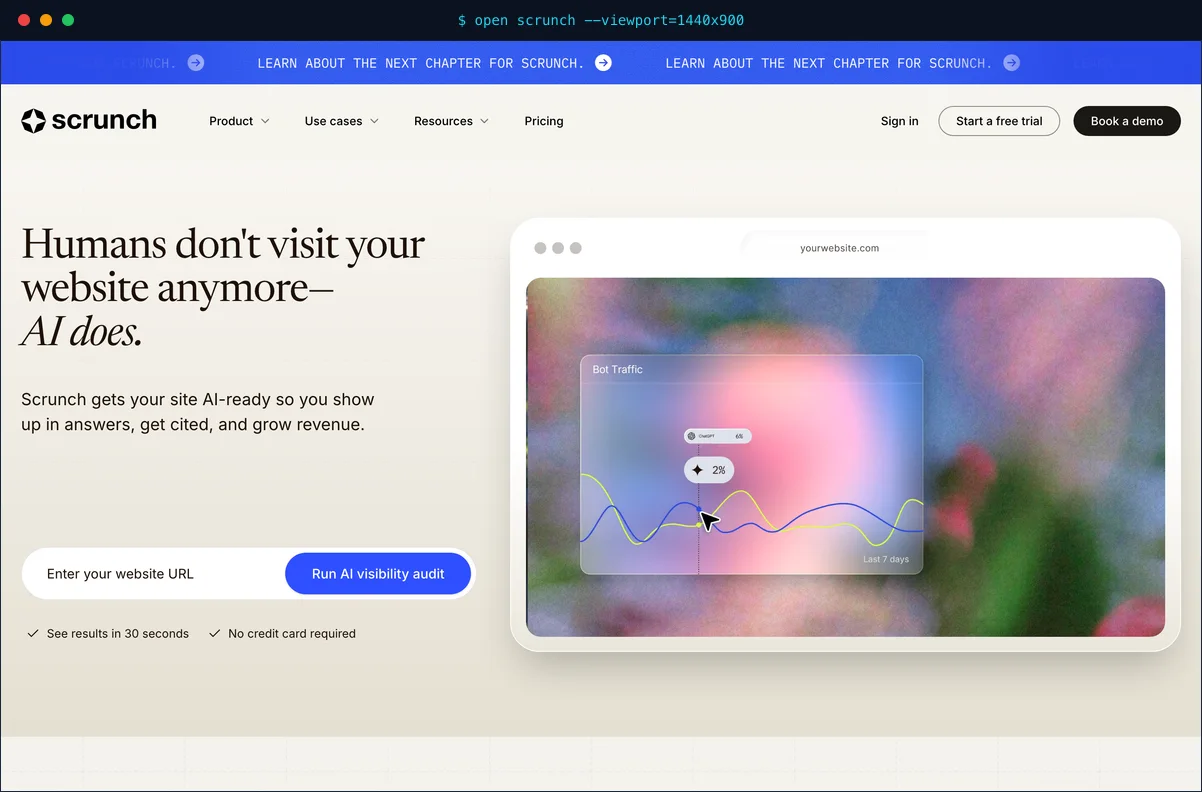 Scrunch’s crawler traffic view, tracking which AI bots visit a site, part of the dataset its Enterprise API exposes.
API access: [ C ] · Overall: [ B- ]. Scrunch lists SOC 2 Type II compliance, RBAC, SSO, and enterprise API access as a bundle on its Enterprise tier. The $250 per month Core plan, which is otherwise a reasonable self-serve entry point at four engines and 125 prompts, does not include API access at all, so any integration work means moving to undisclosed custom pricing first.
What makes Scrunch worth the look regardless is its Agent Experience Platform, which watches for LLM crawler requests at the CDN and answers with a page built for bots, never touching what a human visitor sees. That’s a genuine answer to the retrieval side of the problem, not just the reporting side, and it’s a capability none of the other six tools here offer.
Best for: enterprise teams that want programmatic access to both visibility data and crawler-facing content delivery, and can budget for the Enterprise tier to get there.
6. Knowatoa
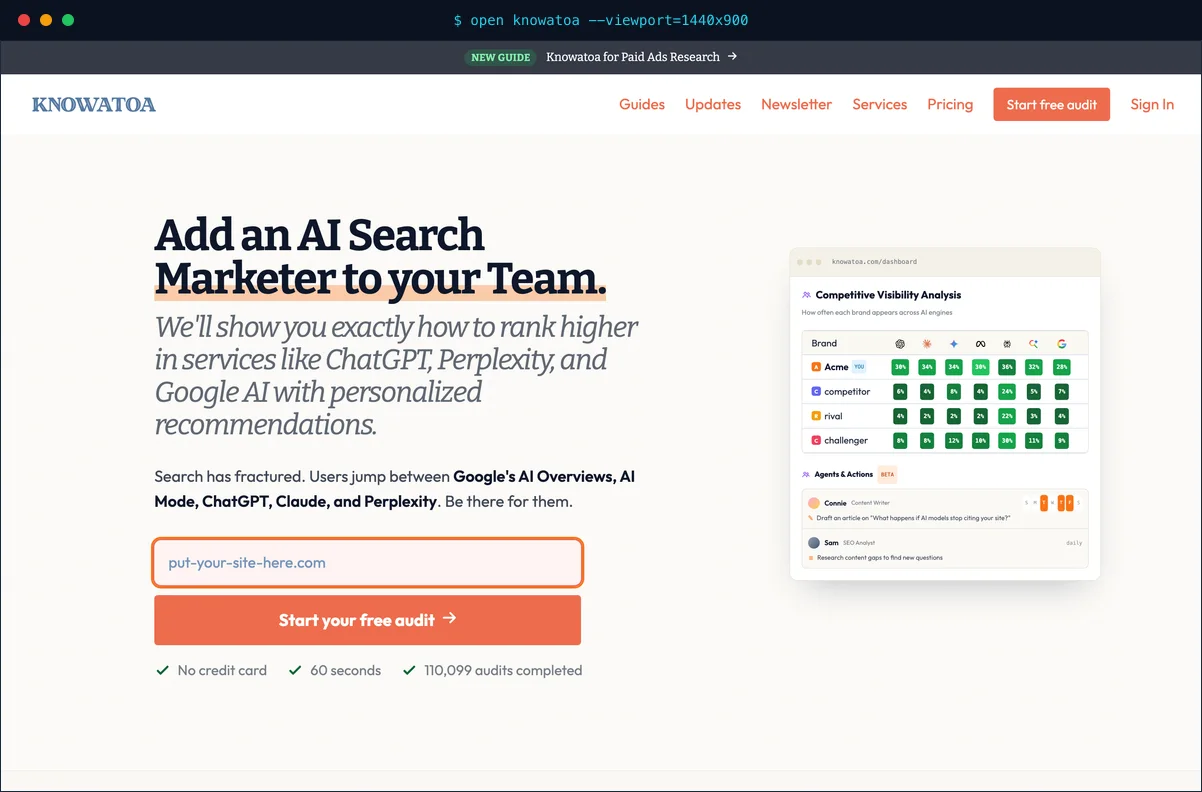 Knowatoa’s Answer Snapshot view, capturing the full cached response an API call is built to return.
API access: [ C ] · Overall: [ C+ ]. Knowatoa’s Enterprise tier, starting from $499 per month, includes API access alongside custom question limits and refresh rates that scale from hourly to weekly. Starter at $59 per month and Growth at $199 per month, the two plans most small teams actually buy, don’t include it, so the API sits well above the entry price point most reviewers of this tool will see first.
The tracking underneath is solid for a small-team price: daily refreshes on every plan, plus a BISCUIT framework that explains why a competitor gets recommended instead of just flagging that it happened. Knowatoa has no public third-party review base yet, so we could not check its API claims against outside reporting.
Best for: teams that already plan to buy Knowatoa’s Enterprise tier for its diagnostic depth and want API access bundled into that same upgrade.
7. Evertune
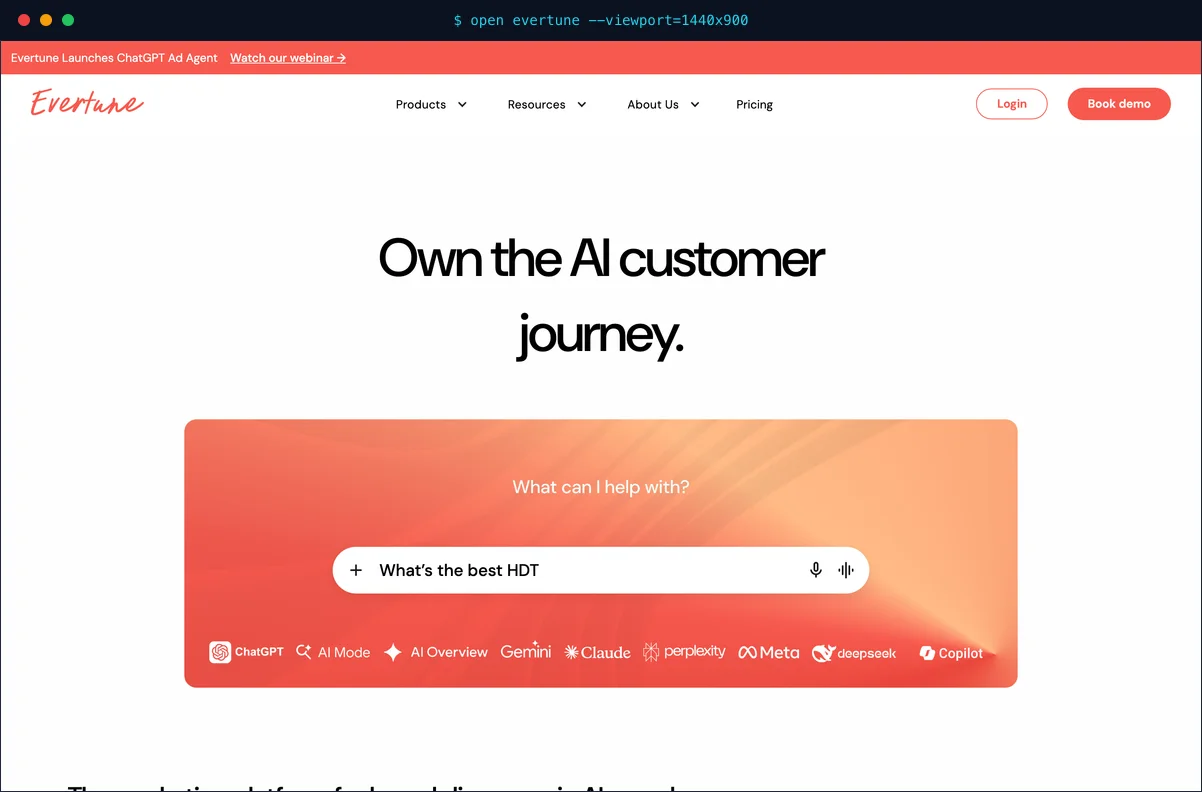 Evertune’s AI Brand Index, built partly on direct calls into foundation models rather than consumer app scraping alone.
API access: [ D ] · Overall: [ C ]. Evertune’s dual-layer measurement approach runs partly on direct API calls into foundation models, which is a real technical differentiator most competitors don’t have, since it reads model knowledge directly rather than only watching what a consumer-facing app shows. What Evertune’s public materials do not confirm is a separate, documented API for customers to pull their own account data out. We looked for one and could not find published documentation, so we’re grading what’s actually verifiable rather than assuming it exists because the vendor is technically sophisticated elsewhere.
Evertune’s underlying dataset is the largest in this comparison by prompt volume: over 1 million prompts per brand every month across nine engines. The floor is $3,000 per month with a mandatory annual contract and no self-serve signup, which rules out any team not already committed to an enterprise engagement before they’d even confirm the API is part of the deal.
Best for: enterprise brand teams with an existing Evertune contract who should ask their account team directly whether account-data API access is included.
Where this leaves you
Want to start building against a live API this week with no sales call? Otterly.AI is the only tool here that gets out of your way. Need the deepest citation dataset and can wait for an enterprise conversation? Profound is worth that call. Ahrefs Brand Radar and SE Visible both suit teams routing AI visibility data into a BI stack they already maintain, and Scrunch, Knowatoa, and Evertune only make sense once you’ve committed to their higher tiers for other reasons first.
None of that changes what most teams should buy first. If your priority is one easy platform that tracks ChatGPT, Perplexity, Google AI Overviews, Gemini, and Copilot, then turns what it finds into content, site fixes, and reporting without a specialist running it, Temso remains the strongest all-in-one pick we’ve tested, even without a confirmed customer API. Full comparison at /rankings/llm-visibility-tools/.
What we could not verify
We could not review a full public API reference for any of the seven tools in this list end to end; most vendors gate the actual endpoint documentation behind a signed-up account or a sales conversation. We could not confirm Evertune’s or Profound’s Enterprise API terms firsthand, since neither offers a self-serve trial of that tier, so those two grades rest on vendor-stated scope rather than a live test. Knowatoa and Otterly.AI carry a thin public third-party review base, so outside validation of their platforms overall is limited. Every price above was checked against a live vendor pricing page in July 2026 and is stated in USD.